Direct answer for Fujimoto ladder risk controls
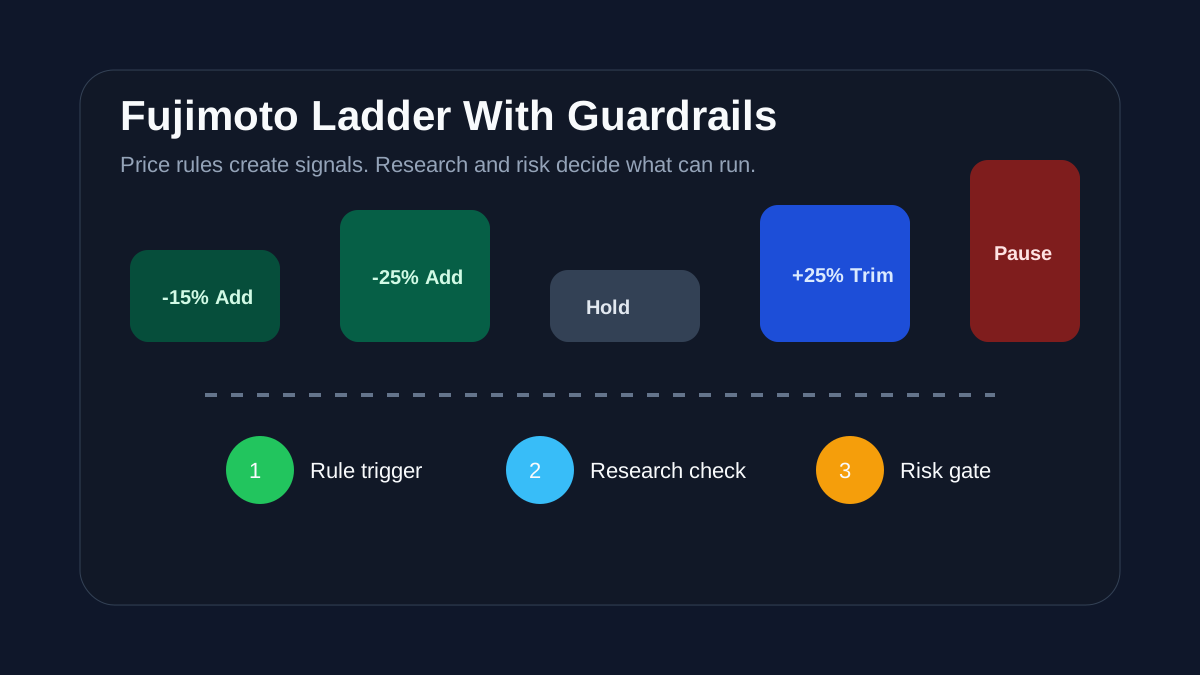
A Fujimoto ladder is a rules based investing method that turns price moves into add, hold, trim, or pause signals. It should not buy more stock only because the price fell.
The safer version combines a price rule with a research gate and a portfolio guardrail. If the thesis weakens, valuation is not attractive, or the portfolio is already overexposed, the ladder should pause instead of averaging down.
- Use the ladder to create candidates, not automatic trades.
- Require a current business thesis before every add.
- Cap cash deployment when many holdings fall together.
The rule is simple. The risk is not.
The Fujimoto ladder works because it creates a response before emotion takes over. A 15% decline becomes a measured add candidate. A 25% gain becomes a trim candidate. The investor is no longer deciding from fear or excitement in the moment.
The danger is that price movement alone does not tell you whether the opportunity improved. A stock can fall because the market overreacted, or because the business is deteriorating. A ladder that ignores that difference will eventually buy more of a broken company.
- Use price thresholds to create signals, not automatic conclusions.
- Require every add to pass quality, valuation, and balance sheet checks.
- Treat thesis deterioration as a veto, not as a smaller add.
A safer ladder has three gates
Investory uses the ladder as the first gate. If a holding crosses a threshold, the system asks whether a rule has fired. The second gate is research. The third gate is portfolio risk.
This structure keeps the strategy understandable. The rule is deterministic, the research explains what changed, and the risk engine decides whether the account can afford the move.
- Rule gate: Has the holding crossed an add, hold, trim, or pause threshold?
- Research gate: Are earnings, guidance, margins, and industry signals still supportive?
- Risk gate: Would the trade breach position, sector, cash, or daily deployment limits?
The crash problem
Market crashes are where naive ladders fail. A concentrated portfolio can have ten positions down 15% in the same week. If the system blindly adds to every one, cash disappears exactly when uncertainty is highest.
A crash-aware ladder needs a global deployment budget. It should also slow down when correlations rise, volatility expands, or the user is already near a drawdown limit.
- Cap weekly add capital as a percentage of portfolio value.
- Prefer staggered adds over all-at-once deployment.
- Pause automation when broad-market volatility exceeds the configured regime threshold.