Direct answer for brokerage connected investing autopilots
A brokerage connected investing autopilot should read accounts, holdings, cash, cost basis, tax lots when available, and investment transactions, then apply user-approved rules and risk limits before recommending an action.
Read-only Plaid access is the right starting point because it proves decision quality without custody, hidden trading authority, money movement, margin, options, or short selling.
- Connect Plaid Investments data in read-only mode.
- Generate explainable add, hold, trim, and pause recommendations.
- Keep each recommendation visible in a decision receipt.
The simple user flow
A retail investor does not want to build an institutional research process before seeing value. The first screen should help them choose a strategy they understand, connect Plaid in read-only mode, allocate capital, and set boundaries.
This is why Investory starts with strategy cards. The product is not asking users to become analysts on day one. It is giving them a disciplined operating system for their existing portfolio.
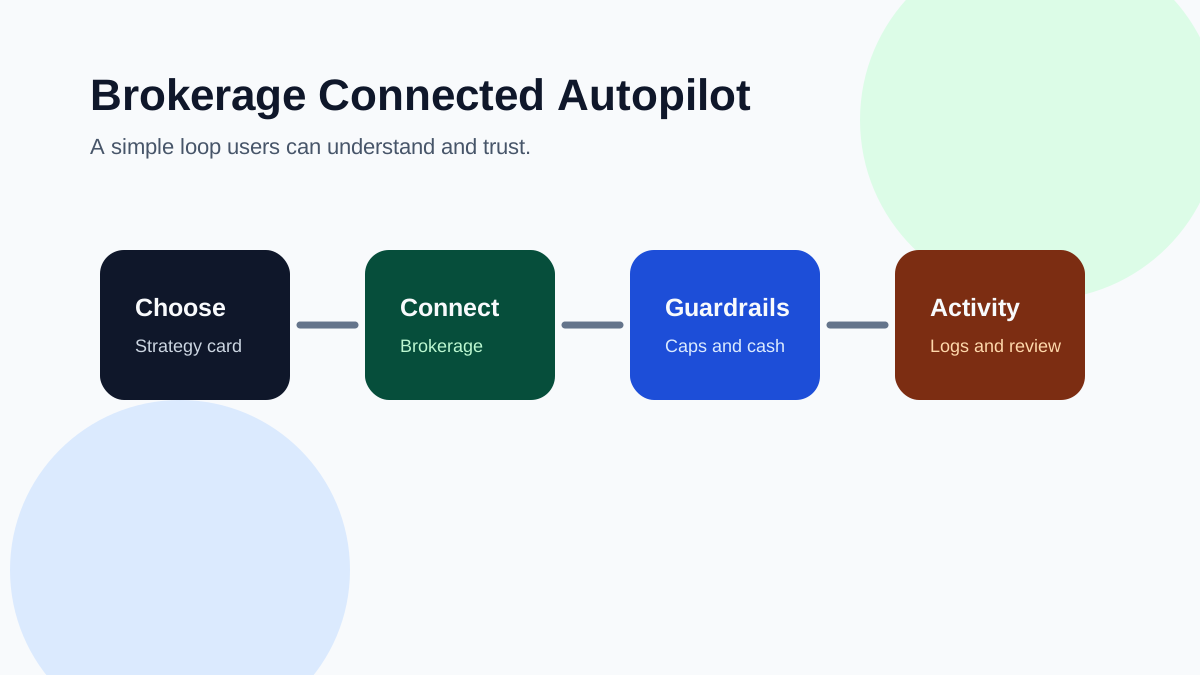
- Choose a strategy such as Fujimoto Classic Ladder.
- Connect a brokerage account through Plaid in read-only mode.
- Allocate capital and set guardrails.
- Review decision receipts as the strategy runs.
Why read-only comes first
Trading permission is powerful and heavily regulated. A product can earn trust faster by starting with holdings, cost basis, tax lots, cash, and investment transactions. That is enough to generate useful add, hold, trim, and pause decisions.
Execution can come later through explicit authorization, compliance review, and a clear adviser or broker-dealer posture. The early product should prove decision quality before asking for trading authority.
- No custody and no hidden trading authority in the beta.
- No margin, options, or shorting by default.
- Every recommendation leaves an auditable decision trail.
The receipt trail is the product
A black box says buy or sell. A useful autopilot explains what rule fired, what research supported it, and how the portfolio changed afterward.
The receipt trail creates confidence because it makes the system inspectable. Users should always know whether a recommendation was blocked, resized, paused, or routed for approval.
- Rule: the exact threshold or rebalance condition.
- Research: the evidence that allowed or blocked the action.
- Risk: the resulting position size, sector exposure, and cash impact.
- Receipt: the immutable record tying policy, evidence, gates, and review together.