Direct answer for AI investing research
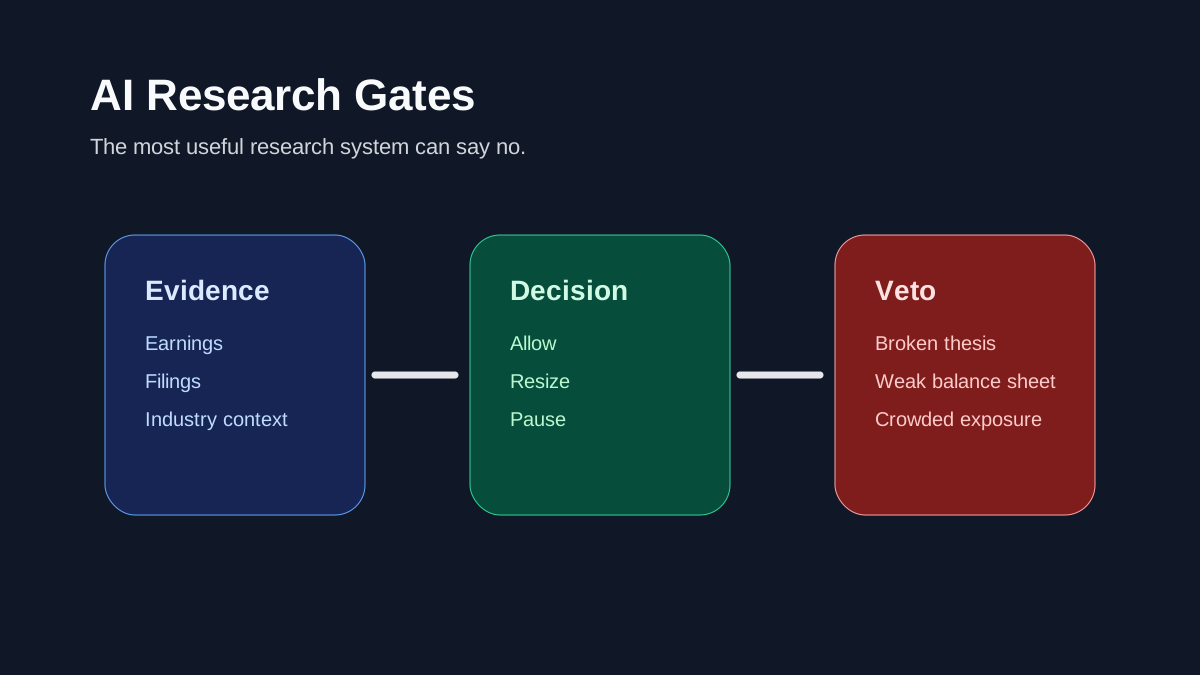
AI investing research is most useful when it blocks weak actions. In a rules based strategy, the research layer should check whether fresh evidence supports the recommendation before any add, trim, hold, or pause reaches the user.
The output should be short, sourced, and tied to the decision. A useful memo explains what changed, what evidence matters, and what would make the strategy pause.
- Use AI to detect thesis drift, not to predict every price move.
- Attach evidence to the recommendation being made.
- Let missing evidence become a pause signal.
Research should reduce bad actions
The most valuable AI research system is not the one that produces the longest memo. It is the one that prevents a bad add, a lazy hold, or an oversized winner from becoming a portfolio problem.
Rules create consistency. AI research adds judgment by checking whether the company still belongs in the strategy.
- Did revenue or margin quality change?
- Did management guidance invalidate the original thesis?
- Did valuation improve enough to justify adding?
- Did industry conditions shift against the company?
The memo should match the trade
A trim signal does not need the same memo as an add signal. Trims should focus on valuation, concentration, tax context, and whether the core thesis remains strong enough to keep exposure.
Adds should be harder. A falling stock needs proof that the opportunity improved more than the risk increased.
- Add memo: why the decline may be temporary and what would prove the thesis wrong.
- Trim memo: why risk has risen and what core position should remain.
- Pause memo: what evidence is missing before capital can be deployed.
Good AI SEO is just clear documentation
LLM visibility improves when the product is described clearly, consistently, and publicly. Cloaked or invisible text is not a durable strategy and should not be used.
Investory uses visible AI information pages, sitemap entries, structured metadata, and an `llms.txt` file so assistants can understand the product accurately.
- Use consistent canonical URLs.
- Publish visible product explanations and policy pages.
- Write articles that answer specific investor and product questions.